
Understanding data types can significantly benefit businesses. Two notable types are first-party data and zero-party data. First-party data is collected from direct customer interactions with a brand, such as purchase history or website visits.
Conversely, zero-party data consists of information that customers voluntarily provide, such as their preferences and intentions.
This article highlights their differences and explains how each type can enhance business connections with customers while respecting their privacy.
Disclosure: We earn a commission if you make a purchase at no additional cost to you. You can read our affiliate disclosure in our privacy policy.
Understanding Zero-Party Data
Definition of Zero-Party Data
 Zero-party, first-party, second-party and third-party data: What’s the difference, and should you use them all? Source: usercentrics
Zero-party data refers to the information customers voluntarily share, such as their preferences and feedback through polls and surveys. This type of data differs from first-party data, which comes from customer interactions like web activity and purchase history, and third-party data, acquired from data brokers, which may not have a direct connection with customers. Since zero-party data is provided with clear consent, it fosters trust between customers and marketers.
It is beneficial for businesses as it mirrors customer preferences, allowing personalized offers and product recommendations that enhance user interactions. As third-party cookies decline, shifting focus to zero-party data aligns with privacy laws while using analytical tools and data management systems to improve advertising efforts.
Emphasizing this explicit information helps marketers gain insight into their target audience, refine audience segments, and execute tailored marketing strategies that honour customers’ privacy choices while adhering to data protection regulations.
Benefits and Use Cases of Zero-Party Data
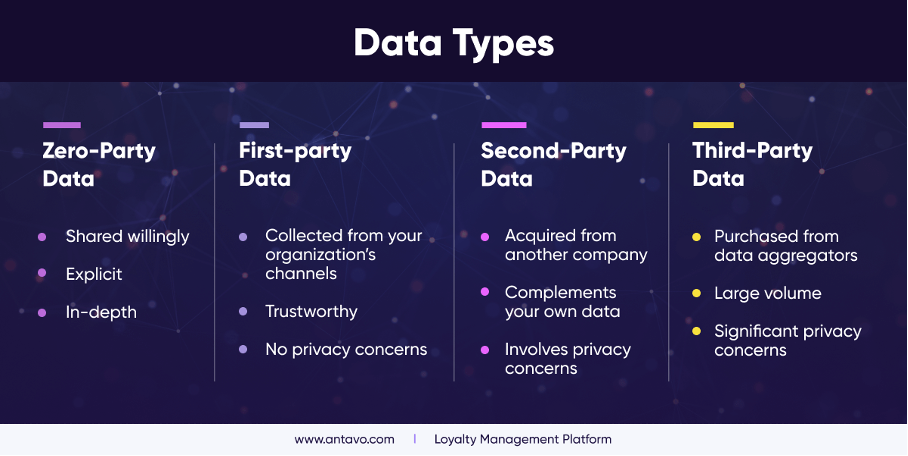 Zero-Party Data Examples for Better Customer Insights in 2024. Source: OptiMonk
Organizations can gain several benefits from collecting zero-party data in their marketing strategies. This data type, including preferences and feedback shared directly by customers through surveys and polls, enables marketers to create personalized product recommendations and tailored offers, increasing trust and engagement.
In scenarios like targeted advertising campaigns, zero-party data enhances customer engagement by providing a clearer understanding of specific audience segments compared to first-party or third-party data, which may not capture the same level of detail regarding customer intentions.
This transparency fosters a stronger relationship between the customer and the brand. Furthermore, zero-party data supports compliance with data privacy regulations by ensuring that businesses have valid consent for the personal data collected without relying on tracking technologies or third-party cookies.
This proactive approach to data collection allows marketers to secure user data while respecting privacy laws, making zero-party data a significant component of their data strategy.
As businesses prioritize data protection and seek trusted partners, zero-party data is a dependable source for improving marketing efforts while adhering to necessary privacy standards.
Exploring First-Party Data
Definition of First-Party Data
 Zero-party data VS first-party data: why you should not forget about first-party?. Source: RedTrack
First-party data consists of information obtained directly from customers through their interactions with a brand, including web activity, purchase history, and feedback from surveys or polls. This type of data differs from zero-party data, in which customers share their preferences, and third-party data, acquired from data brokers and sourced externally.
Businesses collect first-party data via their websites, applications, or marketing initiatives, using it to enhance personalization and effectively target audience segments. Examples include email addresses, customer behaviours, and data gathered through cookies or tracking technologies. By incorporating first-party data into data management platforms, marketers can create tailored offers and product recommendations, build trust, and ensure compliance with data protection regulations.
This dependable data source strengthens advertising campaigns and aids in establishing a universal ID for customers. It informs data strategies that align with privacy laws, ultimately improving marketing efforts and fostering long-term relationships.
Benefits and Use Cases of First-Party Data
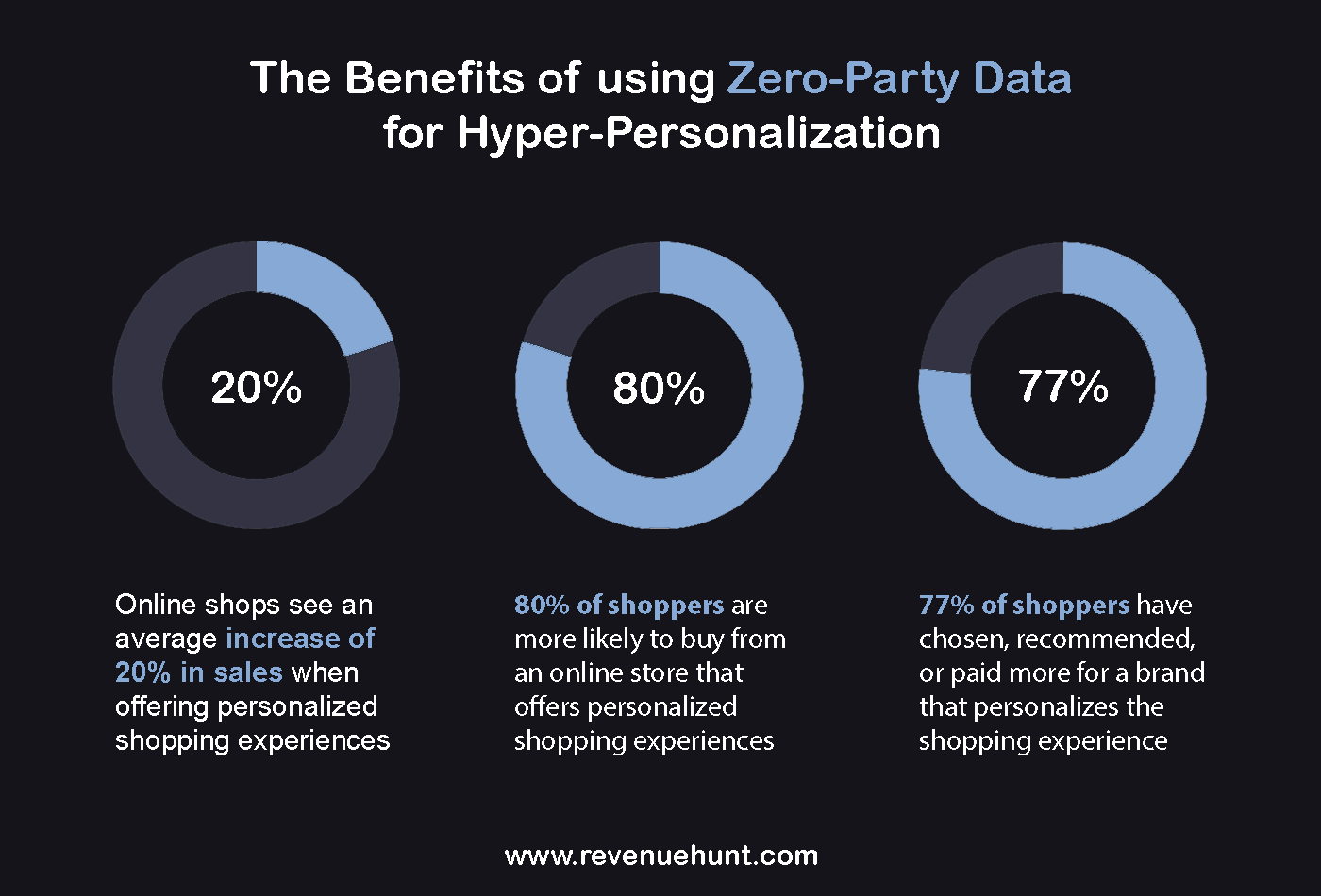 What is Zero-Party Data and Why it Matters for your eCommerce Business. Source: revenuehunt
First-party data offers several benefits in marketing strategies, including accuracy and reliability from user interactions such as web activity, purchases, and feedback. This data allows marketers to tailor offers and product recommendations, improving customer engagement.
For instance, when businesses assess their customers’ preferences through surveys or polls, they can develop targeted advertising campaigns that resonate with specific audience segments, leading to increased conversion rates.
When businesses must establish trust and adhere to privacy laws, using first-party data guarantees valid consent and strengthens data protection. Companies can effectively apply this information to shape their data strategy, ensuring compliance with data protection regulations while using data management platforms to analyze customer behaviours.
By teaming up with trusted partners, they can further enhance their understanding of their target audience.
Thus, first-party data boosts personalization efforts and improves overall decision-making processes, especially in programmatic advertising and the effective use of analytical tools.
Comparing First-Party and Zero-Party Data
First-party data consists of information gathered directly from customers based on their activities, purchases, and interactions. In contrast, zero-party data includes information that customers willingly provide, like preferences and feedback collected through surveys and polls.
The difference between these types of data influences marketing approaches: first-party data helps marketers understand customer behaviours and customize offers, while zero-party data facilitates greater personalization due to its explicit nature and direct consent from users. Zero-party data fosters trust more effectively since it conveys customers’ true desires, improving relationships and making product recommendations more impactful.
Collection methods differ; first-party data typically relies on cookies and tracking technologies, which can raise privacy concerns, whereas zero-party data calls for valid consent through transparent interactions, such as surveys, ensuring compliance with data protection regulations.
Marketers are increasingly adopting zero-party data to shape their strategies by privacy laws and to create customized advertising campaigns and audience segments.
Data brokers generally manage third-party data, but companies seeking to uphold trust view zero and first-party data as more dependable for responsibly managing customer data.
Data Privacy Considerations
Navigating Data Privacy with First and Zero-Party Data
 Zero Party Data: A Complete Guide. Source: jebbit
Organizations can establish a solid data strategy by implementing measures that comply with data privacy regulations when collecting first-party and zero-party data. It is important to keep privacy policies current and employ analytical tools to manage customer information gathered through surveys and polls, as well as to ensure valid consent is acquired for personal data use.
To build trust, businesses should clearly outline data collection practices, detailing how first-party data from web interaction and customer behaviour results in personalized offers and recommendations.
Open communication about tracking technologies, such as cookies and data management practices, can help reassure consumers. Effective consent management is necessary; marketers must ensure that customers comprehend how their data is utilized while offering choices for preferences regarding their information.
By partnering with reliable allies and steering clear of data brokers, companies can strengthen relationships and improve adherence to privacy laws.
Ultimately, prioritizing data protection allows businesses to effectively target audience segments for advertising campaigns while honouring customer privacy.
Integration of First and Zero-Party Data
Collaboration Across Teams with a Unified Tracking Plan
To ensure alignment and consistency in implementing a unified tracking plan, teams need clear data collection and analysis processes, allowing them to share information on user data like email addresses and web activity.
Collaborating with analytical tools helps teams communicate effectively, while polls and surveys facilitate feedback, ensuring everyone is aware of privacy laws and compliant with data protection regulations.
By adopting a data management platform strategy, teams can easily manage customer data, merge insights from first-party and zero-party data, and optimize advertising campaigns based on audience segments.
This unified approach enhances trust, as marketers can provide personalized offers and product recommendations that reflect true customer preferences and behaviors.
Transparency throughout the data collection process, reinforced by a trusted partner relationship, helps ensure valid consent and alignment with data privacy rules, maximizing the potential of generative AI and targeted strategies in programmatic advertising.
The unified tracking plan streamlines efforts and improves understanding of customer interactions to refine marketing efforts.
Strategies for Unifying Zero- and First-Party Data
Organizations can implement surveys and polls to gather zero-party customer data about their preferences and feedback. This information and first-party data collected from web activity and user interactions form a solid foundation for effective data management.
Teams can collaborate by creating a unified tracking plan that aligns their data strategy, ensuring that both zero-party and first-party data are incorporated into analytical tools.
This approach helps marketers target audience segments with personalized product recommendations and offers.
To address challenges in unifying these data types, organizations should maintain compliance with data protection regulations and privacy laws, ensuring they have valid consent from users while gathering personal data.
By partnering with trusted data brokers and implementing data management platforms, companies can navigate privacy concerns related to third-party cookies and tracking technologies.
This proactive strategy builds customer trust and strengthens marketing efforts, leading to more successful advertising campaigns.
Current Trends in Personalization
The State of Personalization in 2023
In 2023, personalization underwent significant changes due to new privacy laws and evolving customer expectations.
Marketers are now prioritizing the collection of first-party data from web activities and purchases while ensuring they respect user privacy and obtain valid consent. Zero-party data, which includes preferences shared through surveys and polls, fosters customer trust by aligning with their true intentions.
Businesses are moving away from unreliable third-party data and data brokers, emphasizing the importance of direct customer interactions for crafting targeted offers and relevant product recommendations.
Data management platforms and analytical tools empower companies to segment audiences while ensuring effective compliance with data protection regulations. As cookies decline, marketers turn to generative AI and universal IDs to track user data without compromising privacy.
This enables the creation of more effective advertising campaigns that genuinely address customer needs. The transition highlights the significance of transparency in data collection, ensuring customers are informed about how their personal information, such as email addresses, is utilized. This method enhances marketing strategies while respecting customer privacy and fostering enduring relationships.
Common Questions
Key Differences between First-Party and Zero-Party Data
First-party data is gathered from direct customer interactions, including web activity, purchase history, and feedback through tracking technologies. In contrast, customers share zero-party data explicitly via surveys and polls, showcasing their preferences and desires.
First-party data requires user data and valid consent, often collected through everyday interactions, while zero-party data indicates clear intent, helping companies build trust with customers.
This distinction in consent mechanisms enhances adherence to data protection regulations and privacy laws.
First-party data aids marketers in understanding customer behaviors and refining targeting in advertising campaigns. Zero-party data significantly enhances personalization by revealing direct customer preferences, allowing for tailored product recommendations and offers.
By combining both data types, businesses can connect with their target audience and enhance marketing strategies through data management platforms and analytical tools. This ensures a personalized experience that respects data privacy and nurtures long-term customer relationships.
Properly implementing these data types creates a strategy that aligns with privacy expectations and regulatory requirements, enabling marketers to navigate the intricacies of programmatic advertising without depending on third-party cookies or unreliable third-party data from brokers.
Value Comparison: Why Zero-Party Data Might Be More Valuable
Zero-party data provides specific advantages over first-party data by delivering richer insights directly from customers about their preferences and needs. This data is shared intentionally through surveys, polls, and feedback, making it highly relevant for personalization.
Unlike first-party data based on observable behaviors and web activity, zero-party data reflects customers’ thoughts, enabling marketers to craft tailored offers that resonate with the target audience.
The consent-driven nature of zero-party data enhances its value, as customers willingly share information knowing how it will be used, thus fostering trust. This transparency is important in an environment where privacy laws and data protection regulations shape data collection practices.
As a result, zero-party data can significantly deepen customer engagement, as users feel their voices are heard and valued.
By integrating zero-party data into their marketing efforts, brands can create more effective advertising campaigns and personalized product recommendations while remaining compliant with privacy standards, ultimately building stronger relationships with their audience segments.
Differences between Third-Party, First-Party, and Zero-Party Data
Third-party data is sourced from data brokers and external origins, often collected through tracking technologies like cookies without direct consent from customers.
This data can offer insights into audience segments but may compromise privacy and trust due to its indirect nature. First-party data is gathered from direct interactions, such as web activity and customer behaviours, making it more reliable and relevant.
Customers willingly provide their email addresses or feedback through forms and polls, granting valid consent. Zero-party data involves personal information that customers intentionally share, often through quizzes or surveys, directly communicating their preferences.
This clear consent strengthens trust and increases the likelihood of effective personalization in marketing efforts.
Data privacy regulations greatly impact how marketers gather and manage these data types. With growing concerns about data protection, marketers must adhere to privacy laws when handling third-party data. In contrast, first-party and zero-party data are favored for their transparency and compliance with data protection standards.
By focusing on effective data management, businesses can create a strategy that enhances programmatic advertising and offers customized product recommendations while maintaining customer privacy.
Ethical Data Handling at Segment

Segment implements strong protocols to ensure ethical handling of first-party and zero-party data by focusing on transparency and compliance with data protection regulations. This includes collecting first-party data through user interactions, like web activity and purchase history, and enabling customers to share their preferences through surveys and polls. By obtaining valid consent, Segment treats personal data respectfully, enhancing customer trust.
When dealing with zero-party data, the company emphasizes clear communication on how this information, like email addresses and feedback, will be used for personalized offers and product recommendations. This transparency is important, especially as privacy laws evolve and third-party cookies decline.
To address potential biases in data collection practices, Segment employs analytical tools and a data management strategy that ensures data is accurately represented across various audience segments.
By working closely with trusted partners and carefully vetting data brokers, they strive to prevent misinformation and uphold ethical standards in their advertising campaigns. This attention to ethical data handling creates effective marketing efforts while prioritizing customer privacy and trust.
Further Reading and Updates
Stay Updated on Segment’s Launches and Events
Segment provides various resources for users to stay updated about their latest launches and events, including direct emails and updates on their website.
They employ newsletters and webinars to share new features or events, ensuring customers receive timely information. Users gain from these updates as this knowledge helps understand how to leverage first-party and zero-party data in their marketing efforts.
By being aware of the latest tools and features, marketers can enhance their data collection strategies, build customer trust, and create personalized offers that align with data privacy regulations.
Regular communication assists businesses in adapting to changes, such as the decline of third-party cookies, by optimizing their data management and employing analytical tools effectively. Access to surveys and polls also allows businesses to gather customer feedback, enabling them to refine audience segments and improve product recommendations.
FAQ
What is the definition of first party data?
First-party data is information collected directly from your audience through interactions, such as website visits, purchases, and surveys. Examples include customer email addresses, purchase history, and user preferences, which can be used to enhance marketing strategies and personalize customer experiences.
What is zero party data and how does it differ from first party data?
Zero party data is information that customers intentionally share, like preferences and feedback. In contrast, first party data is gathered through user interactions, such as website visits. For example, a survey on user interests collects zero party data, while website analytics provide first party data.
Why is first party data considered more reliable than third party data?
First-party data is more reliable because it’s collected directly from your audience, ensuring accuracy and relevance. For example, customer purchase histories and website interactions provide insights you can trust, unlike third-party data, which may be outdated or inaccurate due to lack of direct source verification.
How can businesses effectively collect zero party data from customers?
Businesses can collect zero party data by engaging customers through surveys at checkout, personalized quizzes, or loyalty programs. For example, a clothing retailer might ask customers to share their style preferences in exchange for tailored recommendations and exclusive discounts.
What are the privacy implications of using first party vs zero party data?
First-party data, collected directly from users (e.g., purchase history), usually has fewer privacy concerns and is compliant with regulations. Zero-party data, shared willingly by users (e.g., preferences), enhances trust but requires clear communication. Always inform users how their data will be used, fostering transparency.


