There are currently over 600 millions of blogs online. Just how would you make yours stand out from all of them?
Good content obviously matters. But readers don’t just read your articles and not see anything else. They see everything: your logo at the top of the page, your headline, the images you used, the blog’s color palette, and so on.
All of those little details add up to your blog brand.
Strong blog branding gives your blog an identity. Whether they just see your headline, your featured image, or the intro of your article, there should be something that tells them, “This came from the same creator.”
The good news is that you don’t need a huge budget or a professional design team to get there. You just need to make a few deliberate choices and use them consistently.
Here’s how to brand your blog from the ground up.
What Is Blog Branding?
Blog branding is the identity or personality that your audience will see when they see your content.
Your brand could be anything: a warm and approachable friend, a reliable and helpful coach, the industry expert, a sassy girl who keeps it real, and so on.
Your blog branding could be relayed through the visuals: your logo, colors, fonts, imagery choice, website design, and graphics.
But your brand could also be seen in intangible elements, such as your writing style, personality, values, niche, and the way you communicate with readers.
Let’s say there are two fashion blogs.
One might use bright illustrations, punchy headlines, or casual language. They use slang, reference memes, and so on. While another might use muted color scheme, elegant typography, and a more authoritative and formal writing style.
They’re technically writing about the same thing, but they don’t feel like the same blog.
That’s branding in play.
For content creators, branding is particularly important because your content is not just the product. Your identity is the product. This identity is the one that sells, the one that your audience will either find relatable or aspirational, and the very reason why they would read your blog over the others.
And ideally, you should be able to have your blog branding on point that your audience just needs to take one glance at a page and instantly recognize that it’s you.
Why Does Your Blog Need a Brand?
Establishing your blog brand is helpful because:
- It makes your blog feel familiar – When your articles share the same visual style, tone of voice, and overall approach, readers know what to expect each time they come back. That familiarity creates a more consistent reading experience and makes it easier for your content to stand out when readers encounter it again elsewhere.
- It makes you more recognizable – Readers might discover you through search, social media, newsletters, or another creator’s recommendation. Consistent branding gives those separate encounters a visual connection.
- It makes your blog look more established – A consistent logo, color palette, typography, and image style can make even a relatively new blog feel intentional rather than pieced together.
- It makes content creation faster – Once you’ve decided what fonts, colors, layouts, and image styles you use, you don’t need to reinvent your graphics every time you publish something.
- It gives you room to grow – Your blog might eventually expand into a newsletter, podcast, YouTube channel, online course, merchandise, or even a full business. A recognizable identity gives all of those things something to grow from.
Of course, well-written, optimized content is still important. But making sure how your blog overall look, sound, and feel is consistent is also helpful in ensuring the success of your blog.
How to Brand Your Blog
Branding your blog means deciding what you want it to be known for, then making that identity consistent across your content.
Here’s how to piece everything together:
1. Define Your Blog and Audience
Start with these questions:
- What do you actually want to be known for?
- What does my blog cover?
- What makes my blog different from other blogs?
- Who am I creating it for?
- How do I want people to feel when they read it?
Knowing the essence of your blog and brand gives you direction on every branding decision you need to make here forwards.
2. Define Your Brand Identity
Now think about how your blog would behave if it were a person.
Is it:
- Playful or serious?
- Casual or sophisticated?
- Bold or understated?
- Energetic or calming?
- Expert-led or conversational?
Choose three to five characteristics that describe it best.
These words will then guide everything from your writing style to your visual design. If “calm” is part of your personality, then you know that muted blues or whites and simple photographs are a better fit for your blog. If you’re leaning on playful, then you’ll know that cartoonish style graphics and a more jokey tone is suitable. And so on.
3. Create a Memorable Blog Name
Aim for something that’s easy to remember, type, say aloud, and of course, fitting to your brand identity.
You generally have three routes:
- You can build the blog around your own name, which works particularly well for personal brands, consultants, writers, and creators whose expertise or personality is central to the content.
- You can choose a descriptive name that hints at the topic. This makes the blog’s purpose easier to understand immediately.
- Or you can create a more distinctive brand name that doesn’t necessarily explain the subject but gives you a memorable identity.
Whichever route you take, consider how the name will work beyond your homepage. Check domain availability and relevant social handles, and imagine saying the name on a podcast or putting it on a book cover.
Also consider whether the name gives you room to grow. An extremely specific name can become limiting if you eventually expand into other topics.
4. Design a Logo
Your logo gives your blog a visual identifier so you need a polished and distinct design. Once they see it on the top of the webpage or when they open your newsletter, they should be able to easily remember that it’s you.
A good logo is also important since aside from your blog you’ll also use it on your social profiles, newsletters, ads, and other branded content.
Keep the design relatively simple so it still works at smaller sizes. You should also ideally create a few versions like:
- Primary logo
- Compact or stacked logo
- Icon or monogram
- Light and dark versions
…to ensure that you have the right logo for any situation.
You don’t necessarily need to design these manually. Today’s best logo makers can generate and customize designs based on your blog name, niche, keywords, and preferred style.
We’ll look at some of the best options later in this guide.
5. Choose Your Brand Colors
Don’t choose colors simply because they look nice together. Think about what they communicate.
For example, a wellness blog that wants to feel calm and natural might lean toward soft greens, earthy neutrals, or muted tones. A children’s activity blog could use brighter, more energetic colors. A luxury fashion blog may prefer a restrained palette of black, cream, white, or other sophisticated shades.
You don’t have to follow these associations rigidly. The important thing is that your palette supports the personality you’ve chosen.
And don’t use too many colors. Keep it manageable with:
- One primary brand color
- One or two supporting colors
- Neutral colors for backgrounds and text
Make sure to also repeat the same shades across your website, featured images, social posts, and newsletters, to give readers a visual cue they can begin associating with your blog.
6. Pick Your Typography
How your text looks can affect how your audience perceives your blog before they even read anything.
For example: serif fonts can feel traditional, sophisticated, or literary, making them a natural fit for certain fashion, culture, book, or lifestyle blogs. Clean sans serif fonts can feel modern, while rounded or handwritten styles can create a friendlier or more playful impression.
This is proven too, with a 2025 study published in the European Journal of Marketing that serif and sans-serif logo typefaces produced different perceptions of brands, which could subsequently influence consumers’ attitudes toward them.
Think back to the personality you defined earlier and choose fonts that support it.
You usually only need:
- One heading font
- One highly readable body font
- An optional accent font
Establish rules on other things too like how large your H1 or body text should be, how much spacing you use, when you use bold or italic text, etc.
Then use your established typography consistently. If readers repeatedly see the same style on your blog posts and social graphics, your content becomes more recognizable.
7. Develop a Consistent Image Style
Blog branding doesn’t stop at your logo.
If one article uses soft lifestyle photography, another uses neon 3D graphics, and the next has a corporate stock image, the blog can quickly start looking disconnected.
Decide what kind of visuals suit your brand.
You might primarily use original photography, illustrations, screenshots, minimalist graphics, collages, stock photography, or AI-generated images.
You can still vary your images. They don’t all need to look identical.
Instead, look for a common thread. Maybe your photos are always bright and airy. Maybe your featured images always have the text placed on the right. Maybe you always add a white frame to it.
The goal is for someone scrolling through several of your posts to see that they belong together.
8. Build a Brand Voice
Branding isn’t only visual. Your readers should also recognize how you sound.
For example, do you use humor? Do you write in first person? Are your explanations short and practical or detailed and research-heavy? Do you use technical terminology or translate everything into everyday language?
Once you establish this, the next thing to do is to create a few “this, not that” rules.
For example:
- Friendly, not overly casual.
- Knowledgeable, not academic.
- Encouraging, not overly enthusiastic.
- Clear, not filled with jargon.
These guidelines help you ensure that your writing does not stray far from what you want it to be. It will also become useful if guest writers or editors eventually contribute to your blog.
Your voice should also extend beyond articles. Newsletter subject lines, social captions, error messages, calls to action, and even your About page should feel like they’re coming from the same person or brand.
If you’re having a tough time with your brand voice, you might want to consider checking out some AI writing tools to make it easier.
9. Create a Recognizable Layout for Your Content
Think about how an actual article will look. There’s a lot more elements in play, like:
- Featured images
- Article headings
- Callout boxes
- Quotes
- Buttons
- Illustrations
- Author boxes
- Calls to action
The key is to keep them consistent with your brand identity and to keep them consistent in every article. And no, it doesn’t mean making everything identical. The idea is to repeat enough visual cues that moving from one post to another still feels like you’re on the same blog.
This also applies outside your website. A Pinterest pin, Instagram post, or newsletter can have a completely different layout while still using enough of your colors, typography, imagery, and voice to be recognizable.
And once you’ve settled on your blog layout, it’s also worth running an SEO audit. This can flag issues with things like your heading structure, image optimization, mobile usability, and page performance, so your branding choices don’t accidentally get in the way of your blog’s search visibility or usability.
10. Put Everything Into a Simple Brand Kit
Once you’ve made all these decisions, it’s best to document them via a brand kit.
A brand kit is essentially a central collection of the assets and rules that define your visual identity. It commonly includes things such as logos, brand colors, fonts, imagery, templates, and usage guidelines.
It doesn’t have to be a 50-page brand manual. Even a one-page reference document can stop you from wondering, “Which green did I use again?” every time you make a new graphic.
Some design platforms also let you save these assets digitally and automatically reuse them in future designs, which can make maintaining consistency considerably easier.
Top Logo Makers for Branding Your Blog
Your logo isn’t just a way to identify your blog. It can also set the visual direction for everything that comes after it, from the colors and fonts on your website to your featured images, social graphics, and newsletters. That’s why it’s worth getting a logo that truly fits the identity you want to build.
Thankfully, you don’t have to design one from scratch. These logo makers can help you turn your blog name and ideas into a polished logo, even if you don’t have much design experience.
1. Design.com: Best Overall for Blog Branding
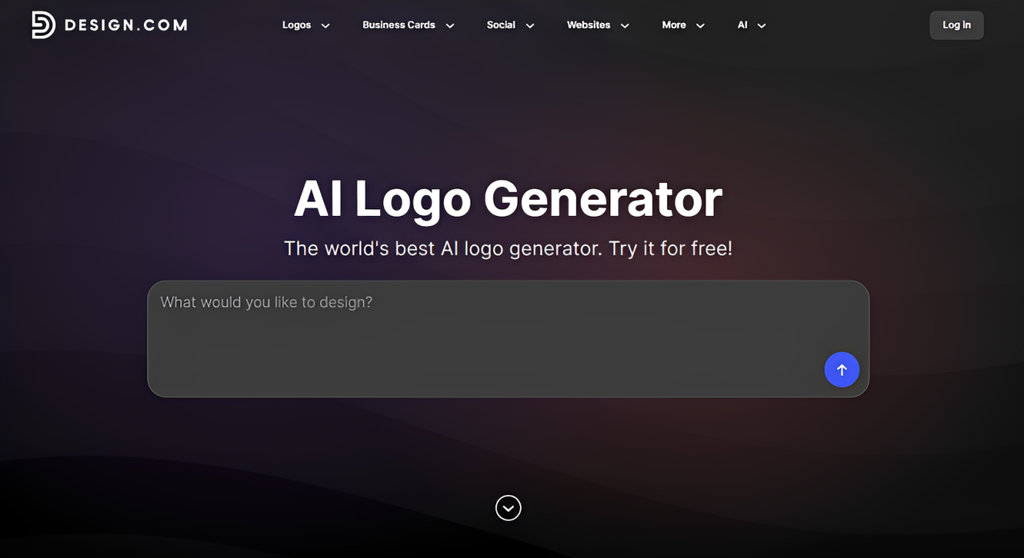
Design.com’s AI logo maker is particularly useful if you’re starting your blog branding from scratch and want the logo to become the foundation for everything else.
Instead of settling for generic logo templates, you can find logos that can fit even the most specific brand identity. This is because the platform hosts over 500,000 logo templates (currently the largest in the market), which covers a wide range of industry, whether a popular one or a niche one. This ensures that you have a great chance of finding a template that suits your needs, no matter what it may be.
That breadth matters for bloggers because niches can get extremely specific. A food blogger, gaming writer, travel creator, parenting blogger, and financial educator probably shouldn’t be choosing from the same handful of visual styles.
Once you’ve found a logo, you can customize the fonts, colors, icons, layouts, spacing, and other elements through a simple drag and drop editor.
The bigger advantage, however, comes afterward. Design.com can carry the visual direction into other materials, including websites, social media designs, business cards, and more with their Brand Kit feature. It sync brand colors and typography across assets, which reduces the amount of manual work involved in keeping everything visually connected.
That makes it a strong all-around option for a content creator who doesn’t just need a logo, but needs an identity that can follow them as their blog expands.
2. BrandCrowd: Best for Creative Logo Options
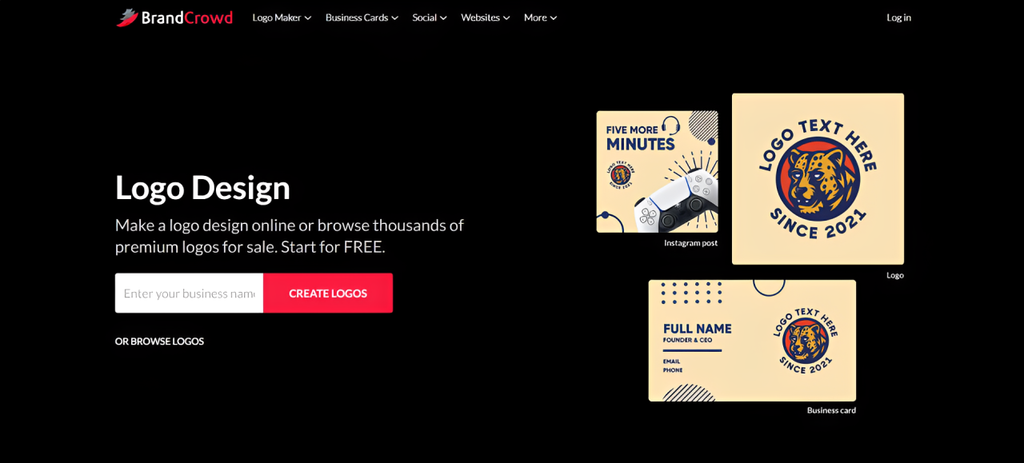
BrandCrowd’s logo maker is a strong option if your priority is finding a polished, creative, and distinct logo without designing one from a blank canvas.
Its process is straightforward: enter your brand name and relevant keywords, browse the generated options, and then customize the design you prefer. You can adjust elements such as fonts, colors, icons, spacing, and layout.
We find their templates strong in terms of visual polish. We also liked that they offer multiple styles and creative interpretation for one concept, for instance you’ll see wordmarks, retro-style badges, or a cute mascot-like character. The variety is particularly useful when you’re still figuring out what you want your blog to look like. Rather than committing to the first reasonable design, you can explore different visual directions and see whether your blog feels better with something minimalist, playful, illustrative, elegant, or bold.
BrandCrowd also extends beyond logos with tools for assets such as social graphics, email signatures, flyers, and other branded materials.
3. Canva: Best for Ease of Use
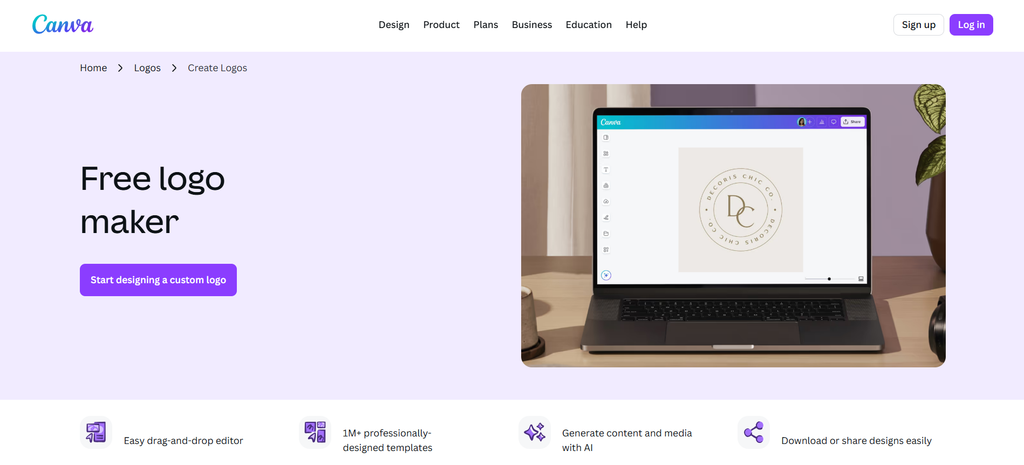
Canva is a good choice if you want to make your own logo but don’t have much design experience.
Its biggest advantage is how approachable the editor is. It’s a simple drag and drop, meaning you just need to click an element to change it or drag it around to move. Elements are also properly organized and labeled on the left-hand side, so you can easily look for frames, icons, or stock photos without digging through menus.
This is especially useful if you already have an idea of what you want your blog to look like but want an easy way to put it together yourself. And because Canva can also be used for featured images, social posts, Pinterest pins, newsletters, and other blog graphics, you can continue working in the same familiar editor once your logo is finished.
4. Wix: Best for Bloggers Building Their Website and Brand Together
Wix is a useful option if you’re creating your logo at the same time as your blog website.
This is especially helpful for new bloggers because your logo shouldn’t feel separate from the site it sits on. The colors, fonts, and overall style you choose for your logo can help guide how you design your website, from its headings and buttons to its general visual direction. Keeping both within the Wix ecosystem makes it easier to build them alongside each other rather than creating a logo first and figuring out how to make the website match afterward.
And because Wix is primarily a website builder, you can easily move from creating your logo to actually building the site where readers will experience it.
5. Looka: Best for Visualizing Your Options
Looka is particularly helpful if you prefer to see your options rather than select them from text-heavy menus.
The logo-making process is highly visual. When choosing symbols, for example, you can see the actual icons rather than relying on their names. Font selection works similarly: Looka shows different fonts already applied to your logo, so you can scroll through previews and compare how your blog name actually looks instead of selecting a font, applying it, and changing it again if it doesn’t work.
This makes experimenting with different directions much easier, especially if you aren’t familiar with font names or design terminology. You can judge options based on what looks right for your blog rather than needing to know exactly what to ask for.
That makes Looka particularly approachable for visual learners and beginners who know what they like when they see it, but may struggle to describe the exact design style they have in mind.
Final Thoughts
Blog branding is ultimately about giving your blog an identity people can recognize.
And that identity goes beyond your logo or color palette. It shows up in how you write your articles, how you phrase your headlines, the images you choose, the way you design your graphics, and even how you speak to readers on social media.
When all of those elements feel connected, your blog starts to become familiar. Eventually, your audience shouldn’t need to see your name to know a piece of content came from you. A certain image style, headline, color combination, or even a few lines of writing can be enough to make them think, “I know this blog.”
That’s the real goal of blog branding: creating something distinct and consistent enough to be remembered.