
Attribution tracking acts as a detective’s notebook for digital marketing. It enables marketers to identify which online channels drive customer purchases, such as social media or emails. By applying this tool, marketers can discern successful strategies from ineffective ones, helping them allocate their budgets more effectively. This article examines the concept of attribution tracking, various models, and its potential to enhance marketing outcomes.
Understanding the right channels significantly impacts business growth.
Understanding Attribution Tracking
What is an attribution tool?
Attribution tools like Floodlight provide insights into user behavior by tracking touchpoints across various marketing channels. They apply different attribution models, such as last-touch and first-touch, to assign credit for conversions based on the user’s interactions along the customer journey. For instance, a content team can analyze performance through web attribution, revealing how social media posts or email campaigns contribute to traffic sources.
These tools help in understanding ROI by filtering data to show which marketing efforts yield the best results. By employing multi-touch attribution, businesses can see the impact of each contact point on conversions, fostering informed decisions about resource allocation in their marketing strategies.
Additionally, machine learning enhances attribution modeling, allowing companies to optimize which marketing channels to focus on. Solutions like app attribution and install-touch methods are significant for businesses engaging with mobile apps. By implementing UTM parameters and Google Analytics, marketers can gain clarity on their campaigns, resulting in successful marketing strategies and improved performance insights across the funnel.
What is attribution tracking?
Attribution tracking is a method in marketing aimed at identifying which channels and touchpoints lead to user conversions. It provides insights into user behavior and the effectiveness of marketing efforts, enabling businesses to allocate resources more efficiently. By monitoring various traffic sources, including social media and web traffic, marketers can understand the customer journey, capturing every interaction a user has with their brand.
Different attribution models, such as last-touch, first-touch, and multi-touch attribution, help determine how credit is assigned for conversions. For instance, last-touch attribution gives full credit to the last interaction before a conversion, while multi-touch attribution distributes credit across multiple touchpoints. Marketers can use tools like Google Analytics and floodlight reports to analyze their attribution data, incorporating machine learning for deeper insights.
What is mobile attribution tracking?
Mobile attribution tracking measures and analyzes how different marketing channels lead to app installs and user interactions. This process examines touchpoints along the customer journey to determine which marketing efforts drive conversions.
For instance, tracking tools might employ software development kits or UTM parameters to follow users from social media posts or ads to app installations, offering insights into which channels, like direct traffic or specific campaigns, provide the best ROI. Mobile attribution tracking assists businesses in allocating resources more effectively by offering insights into user behavior and enabling them to optimize their strategies. Different attribution models, such as last-touch, first-touch, and multi-touch attribution, allow businesses to credit various contact points and evaluate their marketing efforts using established reports and permissions within platforms like Google Analytics.
Effective tracking also enhances cross-channel attribution,ensuring that all marketing channels contribute to understanding the full-funnel results of campaigns, particularly through advanced solutions that incorporate machine learning for deeper insights.
Why use an attribution tool?
An attribution tool is important for understanding how well marketing campaigns perform. It tracks different marketing channels, like social media or email, to show which touchpoints lead to successful conversions. For instance, using tools like Google Analytics or Floodlight allows a content team to examine first-touch and last-touch models, gaining insights into user behavior during their customer journey. This information helps them see which marketing efforts drive sales and improve ROI.
Byfiltering data through the attribution tab, teams can analyze attribution data to find the most effective traffic sources.
Additionally, it enables cross-channel attribution, revealing how various contact points contribute to conversions. Recognizing these patterns helps businesses make informed decisions about where to allocate resources. Moreover, accurately attributing credit using multi-touch or time-decay attribution models highlights the best marketing channels for investment. This understanding of user engagement and campaign effectiveness boosts overall marketing success and enhances the alignment of strategies with revenue goals, making it easier to refine future marketing efforts.
How to evaluate attribution tools
When evaluating an attribution tool, important features include the types of attribution models it supports, such as first-touch, last-touch, and multi-touch attribution. Users should also consider tracking capabilities across different marketing channels, including web and app attribution.
The accuracy and reliability of the tool can be assessed by examining how it collects data through methods like floodlight reports and UTM parameters, as well as ensuring proper user profile permissions and filters for data access. Analyzing cost and ROI involves comparing the tool’s pricing with the insights offered, such as its capability to track direct traffic and conversions across touchpoints and sales funnels. Evaluators should examine how machine learning improves data accuracy and whether the tool provides solutions for understanding user behavior across various channels.
The attribution tab within the tool can serve as an important point for analyzing traffic sources, while full-funnel attribution views assist in recognizing significant contact points that lead to conversions, offering a comprehensive understanding of the tool’s value.
Best Attribution Tools and Platforms in 2024
Triple Whale

Triple Whale offers distinct features that differentiate it from other attribution tools. It integrates smoothly with various marketing channels, such as social media and email, enabling businesses to monitor conversions and user behavior. Advanced attribution models, including last-touch, first-touch, and multi-touch attribution, provide insights into how different touchpoints affect the customer journey.
Using machine learning, Triple Whale analyzes data and offers a complete view of marketing efforts, helping marketers identify effective strategies to boost their ROI.
To make the most of Triple Whale, businesses can establish filters within the attribution tab to segment their traffic sources and gain insights tailored to their user profiles. This allows them to identify which channels drive conversions and which need adjustments.
Additionally, using UTM parameters aids in tracking data directly through platforms like Google Analytics. This thorough tracking solution allows businesses to optimize ad spend by directing resources to the most effective marketing channels and enhancing overall performance.
Cometly
 Cometly offers unique features that distinguish it from other attribution tools, such as detailed insights into user behaviour across various marketing channels and a focus on the entire customer journey through multi-touch attribution. It implements tracking solutions with advanced techniques, including machine learning and UTM parameters, to ensure accurate attribution for online and offline marketing campaigns.
The tool caters to various businesses, from e-commerce sites needing web attribution for sales conversions to mobile app developers focusing on install-touch and app attribution. Marketers can benefit significantly from Cometly’s cross-channel attribution capabilities, which allow them to analyze the performance of each touchpoint, whether through first-touch engagements or last-touch conversions.
Features like the attribution tab also streamline data retrieval while maintaining user profile permissions. By implementing models like time-decay attribution, Cometly provides deeper insights into the effectiveness of marketing efforts, enhancing ROI for businesses of all sizes and sectors.
Adjust

Adjust enhances the precision of attribution tracking for marketers by employing advanced machine learning techniques that analyze user behavior across various touchpoints. With its multipurpose solutions, businesses can gain insights into their marketing efforts through rich attribution data, such as floodlight reports and app attribution metrics.
This assists marketers in understanding their customer journey and optimizing revenue generation by tracking conversion rates across different marketing channels, including social media. Incorporating both first-touch and last-touch attribution models allows marketers to identify which traffic sources yield the highest ROI. Adjust empowers businesses to refine their marketing strategies effectively through features like direct traffic filters, UTM parameters tracking, and the attribution tab in Google Analytics.
Adjust’s unique advantage over other tools lies in its ability to provide full-funnel attribution while also accurately measuring install-touch metrics. This thorough approach, combined with the flexibility of time-decay and multi-touch attribution, ensures a clear understanding of performance across all contact points. By adapting its attribution formula to meet diverse needs, Adjust differentiates itself in the competitive market of marketing attribution tools.
AppsFlyer

AppsFlyer is a leading option for mobile app attribution because of its strong features and functionalities. Its tracking capabilities enable users to analyze different touchpoints along the customer journey, offering insights into marketing channels and traffic sources that lead to conversions. The platform accommodates various attribution models, including last-touch, first-touch, and multi-touch, allowing marketers to select a formula that suits their objectives.
Moreover, it delivers insights via floodlight reports, enhancing user behavior tracking.
Marketers employing AppsFlyer can obtain meaningful insights through its advanced tracking solutions, which use machine learning to assess campaign performance. The platform’s emphasis on cross-channel attribution gives users a comprehensive view of the entire funnel, simplifying the understanding of interactions between different points of contact. With features like UTM parameters and app attribution, AppsFlyer guarantees full visibility into the effects of marketing efforts.
Branch Metrics

Branch Metrics clarifies marketers by measuring performance indicators such as conversion rates and revenue from various traffic sources. Effective attribution tracking emphasizes understanding user behavior across touchpoints, including direct traffic, social media interactions, and app installations.
The platform’s insights derive from various attribution models, including first-touch, last-touch, and multi-touch attribution. These allow businesses to visualize the customer journey and how each marketing effort contributes to success. Users enjoy intuitive solutions that ensure easy tracking through features like the attribution tab in Floodlight reports. Branch Metrics excels in data accuracy by leveraging machine learning to improve attribution data, providing a comprehensive view of user engagement while adapting to various marketing channels.
As a result, marketers can depend on Branch Metrics for full-funnel attribution, gaining insights from every interaction, including install-touch and time-decay metrics. The platform’s capacity to analyze marketing attribution across different user profiles helps businesses allocate resources effectively and optimize strategies, boosting ROI across all campaigns.
Dreamdata
Dreamdata enhances business attribution tracking by employing various models to assign credit across multiple touchpoints in the customer journey. This allows organizations to analyze user behavior over time and understand how different marketing channels contribute to conversions.
Dreamdata’s unique features include its ability to provide insights into the full-funnel attribution process, applying advanced machine learning techniques to evaluate traffic sources effectively, such as social media, direct traffic, and mobile app interactions. With floodlight reports and the ability to track last-touch and first-touch interactions, Dreamdata enables a clear view of how various contact points impact overall ROI. It offers a user-friendly interface with filters that help optimize the tracking process.
By implementing solutions like UTM parameters and integrating with tools like Google Analytics, Dreamdata assists organizations in identifying their most profitable marketing channels and maximizing their marketing efforts. The platform empowers users to examine attribution data and make informed decisions, enhancing resource allocation and campaign performance.
Kochava
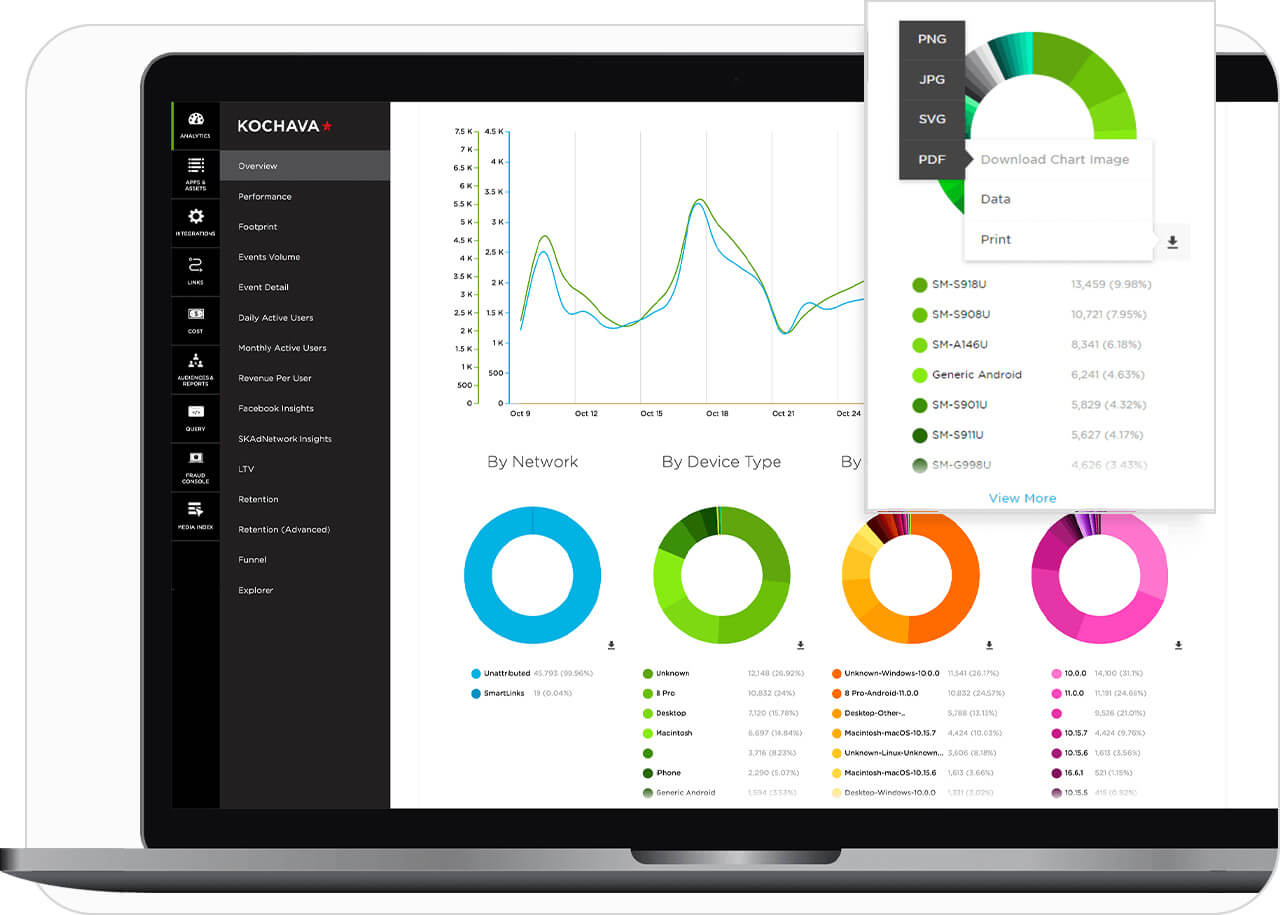 Kochava enhances mobile attribution tracking by offering advanced solutions that measure user behavior across various marketing channels. It provides first-touch and last-touch attribution capabilities, allowing marketers to understand the impact of direct traffic and social media on conversions. Kochava also supports multi-touch and time-decay attribution models, which help analyze the customer journey more thoroughly.
This tool stands out from others by applying machine learning to deliver precise insights and streamline the attribution process. Users can expect detailed floodlight reports that present clear metrics on their marketing efforts, revealing how different touchpoints contribute to sales and ROI. The attribution tab allows marketers to apply filters to their user profile, making it easy to access specific attribution data. This flexibility is important for creating effective strategies based on real-time data.
With features like app attribution and UTM parameters, Kochava ensures that marketing attribution becomes more refined and actionable, benefiting mobile app and web attribution needs across channels.
Localytics

Localytics offers mobile app attribution tracking features that distinguish it from other tools. It provides insights into user behavior through advanced attribution models like last-touch, first-touch, and multi-touch, allowing businesses to understand the customer journey. Marketers value its tracking solutions with filters and permissions, ensuring accurate data across various marketing channels.
Localytics has incorporated machine learning as marketers adapt, enhancing its capacity to analyze traffic sources and predict user actions. This flexibility supports strategies that emphasize engagement and conversion. Businesses using Localytics gain insights from full-funnel attribution, showing the most effective contact points. By applying web attribution and cross-channel techniques, Localytics helps enhance marketing efforts. The detailed floodlight reports enable users to explore app attribution, identifying potential ROI.
Integrating UTM parameters allows tracking across social media and other platforms, ensuring that every touchpoint contributes accurately to the overall results. This data-driven approach improves customer retention strategies and increases marketing effectiveness, making Localytics a valuable resource in the competitive environment of attribution tracking tools.
Singular

Singular offers unique features like multi-touch attribution, which tracks various touchpoints in a customer journey, providing insights into user behavior and the effectiveness of marketing efforts. Its attribution models, such as last-touch and first-touch, help users analyze how different traffic sources contribute to conversions. With floodlight reports, users can gain detailed insights into each marketing channel’s performance.
Singular emphasizes data privacy by incorporating filters in its tracking methodologies, ensuring compliance with regulations and protecting user information. It integrates seamlessly with various marketing platforms, enabling a comprehensive view of performance through app attribution and web attribution while adjusting analytics for direct traffic and social media efforts. The attribution tab allows users to manage permissions and access insights easily.
Using UTM parameters, Singular enhances campaign tracking, while machine learning aids in analyzing trends. This combination of features makes Singular a helpful solution for marketers looking to optimize their strategies and ROI through accurate attribution modelling and cross-channel insights.
Tapstream

Tapstream offers unique features that set it apart from other attribution tools. Its comprehensive tracking solutions for web and mobile app environments excel in attribution modelling. It allows marketers to analyze various methods, such as last-touch, first-touch, and multi-touch attribution. This flexibility provides deeper insights into user behaviour across multiple channels.
For mobile attribution tracking, Tapstream integrates effectively, ensuring that user interactions are captured through install-touch methods. This is particularly beneficial as it allows businesses to see how different marketing channels influence conversions, giving them insights into their customer journey. Businesses can use Tapstream for effective campaign optimization by tracking the impact of different touchpoints, assessing marketing efforts, improving ROI, and allocating resources more efficiently.
Additionally, UTM parameters enable users to pinpoint traffic sources and enhance their targeting strategies. The platform’s ability to present floodlight reports also aids in evaluating campaign performance, facilitating data-driven decisions.
Choosing the Right Sales & Marketing Attribution Model
When selecting a sales and marketing attribution model, businesses should consider their specific goals, customer journey, and the nature of their marketing channels.
For example, single-touch models like last-touch and first-touch may simplify tracking but overlook important touchpoints, leading to skewed insights. Understanding different attribution models, such as multi-touch, can help organizations identify which channels and touchpoints, like social media or direct traffic, drive conversions effectively. This understanding aids in making informed decisions about where to allocate resources for maximum ROI. Organizations should be wary of relying solely on specific attribution models without a comprehensive view, as this could lead to missing out on significant insights from various marketing efforts. Tools like Google Analytics filters, floodlight reports, and UTM parameters can enhance tracking accuracy.
Additionally, businesses should consider the shift towards cross-channel attribution and the role of machine learning and time-decay attribution in uncovering user behavior across different platforms, including mobile apps.
Getting Started With Attribution Tracking
How to Track & Attribute ‘Offline’ Conversion Events
To track offline conversion events effectively, businesses should implement multi-touch attribution models that evaluate various contact points in the customer journey. This tracking enables marketers to monitor user behavior across different marketing channels, including social media, emails, and direct traffic. Employing UTM parameters can improve attribution data by tagging traffic sources to determine which campaigns led to offline conversions.
Customer identifiers, such as phone numbers and emails, allow for linking offline sales to specific marketing efforts, providing insights into the effectiveness of different touchpoints. Advanced CRM systems with built-in attribution tracking solutions assist in integrating offline conversion tracking with online models.
For example, floodlight reports and app attribution data can provide a comprehensive view of marketing performance. Implementing machine learning can further enhance these processes, yielding deeper insights into user behavior and improving overall ROI. Permissions and filters within tools like Google Analytics provide customized views of the attribution tab, simplifying the analysis of single and multi-touch attribution for effective marketing strategies.
Finding Your Most Profitable Marketing Channels with Attribution Tracking
Businesses can identify their most profitable marketing channels through attribution tracking by analyzing the performance of each traffic source across various models like first-touch, last-touch, and multi-touch attribution. By setting up tracking codes and using tools like Google Analytics or Floodlight reports, they can track how different marketing channels, such as social media and email marketing, contribute to conversions.
Companies should focus on metrics like conversion rates and ROI to measure effectiveness. Marketing attribution offers insights into user behavior and interactions with content, enabling businesses to better understand the customer journey. These insights can guide strategic adjustments by revealing which touchpoints drive sales and which do not, allowing companies to redirect resources toward the most effective channels.
For instance, if a single touch from a social media ad yields low conversions while the first interaction through email shows better results, the business can adjust its marketing efforts. Implementing time-decay attribution can also help prioritize recent touchpoints, giving credit where it’s due and supporting informed decision-making.
FAQ
What is attribution tracking and why is it important for digital marketers?
Attribution tracking measures which marketing channels drive conversions. It’s crucial for optimizing budgets; for example, if email campaigns yield higher ROI than social ads, marketers can adjust strategies to allocate funds more effectively, ensuring better outcomes and improved performance.
How do different attribution models impact marketing strategy?
Different attribution models determine how credit is assigned to various touchpoints in a customer journey. For instance, using a last-click model may undervalue early stages like awareness. Switching to a multi-touch model can optimize channel budget allocation, ensuring better targeting and increased ROI.
What tools and software can be used for effective attribution tracking?
Effective attribution tracking tools include Google Analytics for web data, HubSpot for marketing performance, and Mixpanel for user behavior analysis. Additional options are Kissmetrics for customer insights and Adjust for mobile app tracking. Use these to measure ROI and optimize marketing strategies.
How can digital marketers ensure accurate data collection for attribution tracking?
Digital marketers can ensure accurate data collection by implementing UTM parameters for campaigns, using pixel tracking, regularly auditing analytics setups, and integrating cross-channel data sources like CRM systems. For example, tag all campaign links with UTM codes to track traffic origins precisely.
What are common challenges faced in attribution tracking and how can they be overcome?
Common challenges in attribution tracking include data silos, multi-touch attribution complexity, and cookie limitations. Overcome them by integrating data sources for a unified view, using analytical tools like Google Analytics for multi-touch models, and adopting server-side tracking to navigate cookie restrictions.


